Image via Getty/Allen J. Schaben
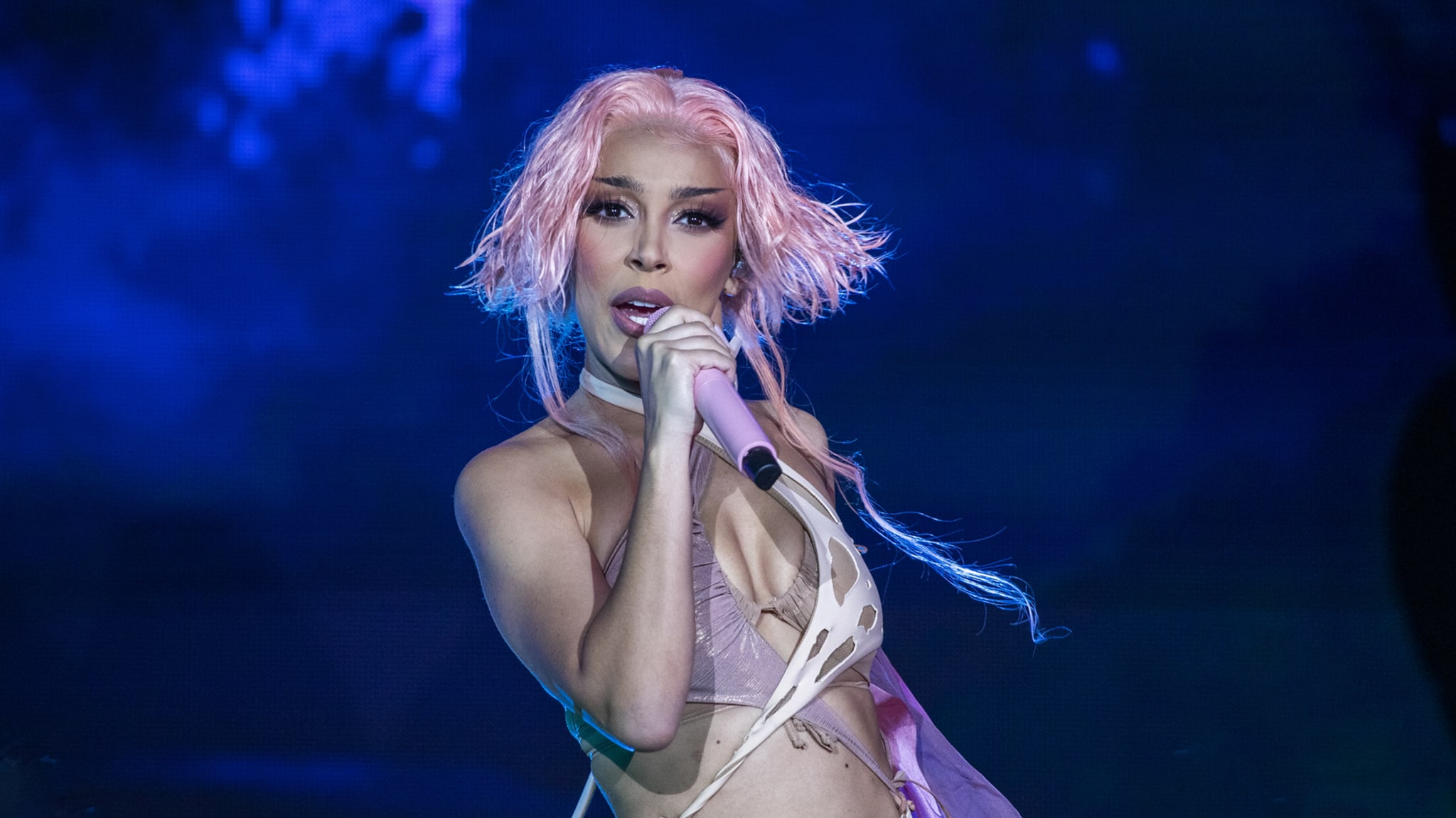
Remy Ma rejected the notion that Doja Cat is a rapper during a recent episode of Drink Champs.
“I don’t think she’s a rapper,” she told Drink Champs hosts NORE and DJ EFN. “Let’s be clear with that. [The Grammy committee] put her in the rapper category, and I don’t think she’s a rapper. But she makes dope records, and I think she’s dope.”
Remy isn’t alone. Her comments reflect a popular perception among a certain sect of rap fans. Despite the fact that Doja raps on most of her songs, many hip-hop fans refuse to refer to her as a rapper, labeling her as a pop artist instead. We even see it in our own comments sections at Complex. Last November, our Instagram post celebrating the best rappers in their 20s was riddled with befuddled commenters asking variations of “Why is Doja Cat even on this list? Since when is she a rapper?” Similar messages filled the Instagram comments section when it was announced that Doja’s Planet Her became the most-streamed album by a female rapper in history.
“Is Doja Cat a rapper or?” is one of the first questions listed under the “people also ask” section on her Google search results. When attempting to label multi-talented artists like Doja, fans find themselves confused, and it starts to become apparent how pointless the categorizations are. But it also hints at a deeper issue. The industry is flooded with artists who sing and rap, but male artists aren’t having any trouble being considered rappers (sometimes to their dismay). On the flipside, Doja Cat is a prime example of genre-bending women who’re primarily being labeled singers.
Doja Cat started her career rapping in the LA underground scene, and she still raps on many of her songs (like “Rules” and “Juicy”), but she is widely considered “just” a pop star because she sings on some of her biggest Billboard hits. The Grammys committee nominated her in pop categories, but not rap categories, and hip-hop fans continue to fight the notion that she’s an MC. Yes, part of her catalog allows her to sit next to Olivia Rodrigo, Dua Lipa, and SZA on a festival bill or in an award category. But she also fits next to Nicki Minaj, Cardi B, and Megan Thee Stallion as an MC capable of dropping fun, technically strong verses over a variety of beats. Despite her talent, she, like other Black artists before her, is boxed in by fans and industry machinations.
Doja recently won a Grammy with SZA for Best Pop Duo, but she also topped the Billboard Hot 100 with the Nicki Minaj-assisted “Say So” remix, which was a first for a woman rap duo. Her pop songs shouldn’t negate her bars. After people questioned her Best Female Hip Hop Artist nomination at the 2021 BET Awards, she even tweeted at her detractors, telling them, “DONT EVER FUCKIN DISRESPECT ME AS A RAPPER. AFTER THE LAST SONG I DROPPED YOU WILL RESPECT MY PEN AND THATS FUCKIN THAT.”
Doja has rap bona fides. Coming up, she honed her pen amongst a community of well-respected MCs in her native LA. VerBS is an MC, promoter, and radio host who founded the Bananas showcase in the city, which has been active for over 14 years. The LA rap vet helped book Doja’s first-ever show at Bananas, which he opened for, along with Busdriver and Ill Camille in 2014. VerBS tells Complex that he’s proud of her success, and also confused about the “not a rapper” stigma surrounding Doja, who he sees as a “rapper first.”
“She dummy bars out,” he says. “[She has a] crazy intricate [style]. She listens to rappity rap on the low.” Indeed, Doja has been open about stanning underground rappers like Aesop Rock. Last year, she took to Instagram Live to praise Phonte’s classic rhymeless verse on “Whatever You Say.”
VerBS recalls being present for the first day the then-teenager met producer Jerry “Tizhimself” Powell, who introduced her to Yeti Beats, Doja’s go-to beatmaker at one point. “[Tizhimself] met her on SoundCloud, and she came down to this loft he was living in, in Downtown LA. We were listening to beats, and then we went to the studio.” From there, Doja hung around the crew and developed an artistic kinship, showing up for cyphers at Bananas and Ladera Heights mansion parties. VerBS says he helped hone her craft as an MC, but her natural talent made it an easy task.
“When they were developing her, I was like a live performance coach and rap coach,” he recalls. “I would play her hella hip-hop videos and we’d freestyle. In preparation for her first show we were [practicing] one on one, going through her set. She was phenomenal, she didn’t really need me but I just happened to be there.
VerBS says he also put her on to underground MCs like Homeboy Sandman, and VerBS sees their influence in her repertoire. “For people who really listen to rap, she does a lot of cool left-field references here and there,” he points out. “She makes words rhyme that aren’t supposed to rhyme—the thing Jay-Z and Eminem and André 3000 does. That’s stuff that can’t be taught.”
Her short, high-energy verses on songs like “Need To Know” show her skillful ability to quickly pivot from crooning to finding the pocket of the Dr. Luke production. The same goes for “Tia Tamera,” where she holds her own with Rico Nasty, as well as “Say So,” where she shows out with Nicki. Doja’s “Rules” flow was also compared to Kendrick Lamar’s “Backseat Freestyle” cadence, and whenever you’re garnering those kinds of comparisons, there shouldn’t be much debate as to whether you’re an MC.
No matter what you think about the content of her rhymes, it’s undeniable that she’s rhyming, and she’s proven to be gifted at infusing her character into her verses, meshing unique inflections with a range of flows. There are videos of her cyphering at Bananas in the 2010s, and she still has a Facebook post up of the 2014 Bananas show with Busdriver, VerBS, and Ill Camille on the bill. No matter where her catalog goes, it can’t take away her come-up in the LA rap scene, and people who agree with Remy may be unaware of Doja’s “underground” origins, but that doesn’t mean they don’t exist.
Remy Ma’s opinion on Doja’s rap credentials reflects antiquated notions of what a rapper can be. When Remy first started rhyming in the mid-’90s, there was no confusion that Lil Kim, Foxy Brown, or Biggie and Tupac were rappers. They infused their verses with melody, but they usually got an R&B singer to lace the hook if they wanted their records to feature full-on singing. Versatile acts like Lauryn Hill, Ol’ Dirty Bastard, PM Dawn, and Missy Elliott existed in the ‘90s, but they were exceptions to the rule. There weren’t yet enough genre-benders at the time to have a “state of the culture” discussion, which meant that the rules of rap were rigid.
But over time, the rules shifted as melodically inclined artists like Kanye, Drake, and Lil Wayne broke boundaries. Soon, “genre-bending” became a genre all to itself. The modern music landscape is dominated by artists like Drake and Nicki Minaj, who fall in the Lauryn Hill archetype as traditionalist-appeasing MCs who have records where they’re singing their hearts out, but are mostly deemed rappers. In the muddy middle ground are artists like Future, Young Thug, Gunna, the late Juice WLRD, and thousands more who are demeaned as “mumble rappers” by fans who don’t understand them (but still call them rappers). And on the other end of the spectrum there are artists like Doja Cat, who are introduced to the masses through so-called “pop songs” that feature singing, but also drop verses that prove they’re more than capable of rapping. The latter group is mostly excommunicated from rap discussions.
“When they were developing her, I was like a live performance coach and rap coach. I would play her hella hip-hop videos and we’d freestyle.” – VerBS
So why do fans consider Drake and Juice WRLD to be rappers, without giving it a second thought, whereas Doja Cat has a much harder time receiving that designation? Part of it has to do with gender. Women have historically had a difficult time being taken seriously as rappers by the hip-hop community. Women MCs are often put in a “female rap” box, which most male fans regard as some kind of junior league to the male rap arena. As Che Noir told Complex, people automatically assume women in rap have writers, and if they don’t have ghostwriting accusations, men often criticize them for their sexualized content, while having no issue with raunchy raps or repetitive content from their male counterparts. With those obstacles in place for women in rap, it’s sadly unsurprising that fans are reluctant to call Doja a rapper. To many of them, she must not be writing her raps because pop stars have writers, but there’s no indication that that’s the case with Doja, who often posts her lyrics on the SoundCloud uploads of her songs.
Perhaps things would be easier for her if we removed the ambiguous “pop star” term and simply regarded her as a rapper-singer. Pop music is a mysterious term full of historical prejudice. Iconic Black vocalists like Prince, Whitney Houston, and Michael Jackson had trouble being welcomed into the pop world despite performing the kind of records that their white peers—more easily deemed “pop stars”—were singing. And now, Black artists who came out of the gate rapping have a hard time shedding that label. Artists like Drake and Kanye West routinely break records with their album releases but are never deemed pop stars like Taylor Swift or Olivia Rodrigo.
Tyler, the Creator made it clear that his melodic album IGOR was inspired by classic soul and funk, but it still got nominated as a rap record by the Grammy Committee, who also placed it in the since-discontinued Urban category. During the post-Grammys press conference, he said, “On one side, I’m just grateful that what I made could be acknowledged in a world like this. But also it sucks that whenever we—and I mean guys that look like me—do anything that’s genre-bending or anything, they always put it in a Rap or Urban category.” He also surmised “[Urban] is just the politically correct way to say the “N” word to me. So, when I hear that I’m like, ‘Why can’t we just be in Pop?’ So, half of me felt like the Rap nomination was a backhanded compliment.”
That sentiment is why rappers like the late Juice WRLD eschewed categorization, telling Billboard that he wanted to be regarded as “less of a rapper and just more as a musician” in 2018. While rap fans took the comment as a denigration, there’s nothing about his prodigious freestyling ability that indicates he didn’t respect the craft of rap. His comments were simply lamentations of navigating an industry where categorization determines what radio stations you can play on, what outlets cover you, and what festival bills you’re considered for (all of which affect your bag). All the while, he was chastised for rejecting the rapper label while fans disparaged his brand of emo-rap as not “real hip-hop” in the first place. Versatile artists like him and Doja are in a never-ending catch 22.
Nicki Minaj dealt with the same tumult in the early 2010s. She released overt pop plays like “Starships” and “Super Bass” which drew ire from fans and rap media personalities who pretended she was forfeiting her MC card just because she wanted to sing a little. Lil Wayne ended up pulling Young Money acts from Hot 97’s Summer Jam in 2012 after Peter Rosenberg angrily called her “Starships” hit “bullshit” during his opening stage DJ set. Speaking about her pop forays, Nicki said, “I wanted to experiment. My whole career has been a playing field for me to try new things. I never put on a limit on myself. And I don’t like when, especially Black women, put a limit on what they can do.”
While Nicki, Tyler, and Juice WRLD fought to justify that they weren’t “just” rappers, Doja is continuously left out of the rap discussion. For some, it’s because of the imbalance of her catalog, but for others, the music industry’s rampant colorism could be a factor. Through no fault of her own, Doja Cat’s complexion allows her to fit the image of American pop stars so well that people will simply label her that without further interrogation.
Doja’s talent shouldn’t be held against her. It’s a new day. Genre-bending doesn’t just refer to sing-song rapping, or singing and rapping at an arbitrarily acceptable ratio anymore. Doja sings a lot, but she’s also proven herself capable of dropping a dope verse whenever she wants. We can’t forget the latter. Everyone meets music at a different point, therefore we all have different opinions on where versatile artists land on the rapper vs. singer spectrum. But if the dividing lines deny talented artists their freedom, perhaps it’s time to do away with them. Or we can acknowledge Doja’s rap skills and appreciate them, because they’re in abundance.