Cinema has undergone multiple changes since the start of the 21st century. Netflix transformed from a scrappy DVD-by-mail service into a streaming juggernaut, and, in the 2010s, streaming became the preferred way to watch movies — a far cry from the exclusive movie-theater experience seen throughout movie history.
Major studios lost a grip on the industry as A24 and Neon rose to prominence with indie charm. We witnessed the debuts of powerhouses like Michael Cera, Zoe Saldańa, Michael B. Jordan, Zendaya, and Timothée Chalamet. Audiences were captivated by new visions from Ryan Coogler and Jordan Peele, while Christopher Nolan's commercial and critical dominance reshaped the industry.
To determine this list's ranking, we considered influence within cinema, cultural impact, and quality.
Without further ado, here are the 25 best movies of the 21st century, ranked.
25.Baby Boy (2001)
Director: John Singleton
Writer: John Singleton
Often (wrongly) dismissed as "that film that's always on BET," John Singleton's Baby Boy was the last feature the icon wrote before he died in 2019.
The South Central coming-of-age story launched Tyrese Gibson's film career in a role initially written for 2Pac, propelling him into the Fast and Furious and Transformers franchises. It also marked a pivotal moment for Taraji P. Henson, whose grounded performance as Yvette anchors the film. Baby Boy epitomizes the stories Singleton loved telling, showcasing the beautiful struggle of hood life. -khal
24.Love & Basketball (2000)
Director: Gina Prince-Bythewood
Writer: Gina Prince-Bythewood
Gina Prince-Bythewood's directorial debut aces two genres: romantic drama and sports. Love & Basketball follows Monica (Sanaa Lathan) and Quincy (Omar Epps) over four "quarters," spanning childhood through college ball and into the NBA, charting both their relationship and respective careers.
Released during a boom period for Black cinema, the film showcased two of young Black Hollywood's brightest stars. Their real-life chemistry elevated the movie to a cult classic. -khal
23. Hereditary (2018)
Director: Ari Aster
Writer: Ari Aster
Ari Aster's debut feature, Hereditary, goes beyond jump scares and graphic violence. Hereditary examines how family trauma passes through generations, using grotesque, sudden imagery that allows audiences no time to breathe. Toni Collette and Alex Wolff deliver stellar performances to help illustrate the consequences of familial pain.
Aster's signature dollhouse aesthetic—as seen in the memorable opening—came from shooting on custom soundstages with removable walls, allowing extreme close-ups and distant wide shots that made viewers feel like they were peering into a miniature world. Hereditary endures because dysfunctional family stories, unfortunately, never go out of style. - Layla Ahmad
22.Moonlight (2016)
Director: Barry Jenkins
Writer: Barry Jenkins
Barry Jenkins and Tarell Alvin McCraney's Moonlight is told in three chapters documenting one Black gay man's life: from Little (Alex Hibbert) to Chiron (Ashton Sanders) to Black (Trevante Rhodes). The coming-of-age tale begins in Miami’s Liberty City, where survival means burying your true self under layers of learned masculinity. Jenkins' direction is achingly intimate. Scenes are bathed in blue and purple hues, finding beauty in spaces Hollywood has historically shied away from. Moonlight's trauma isn't sensationalized; it's carefully examined with tenderness. Mahershala Ali's Juan, a drug dealer who becomes young Chiron's protector, teaches him to swim in moonlight that makes "black boys look blue." Juan is a father figure who will never be redeemed by the narrative, yet offers genuine care.
And then there is that revolutionary patience. The beach scene between teenage Chiron and Kevin unfolds with vulnerability—so sincere and honest that Chiron carries that memory for a decade. When they reunite in the diner as adults, the weight of everything unsaid returns. It's here that we realize Hibbert, Sanders, and Rhodes don't just play the same character, they embody how we fracture and rebuild ourselves to survive from childhood to adulthood. -Darius Osborne
21.Sinners (2025)
Director: Ryan CooglerWriter: Ryan Coogler
Coogler shot Sinners on both IMAX 15/65mm and Ultra Panavision 70mm anamorphic, making it the first film to combine these formats. The celebrated barn sequence—a virtuoso oner cycling through decades of Black musical history—is a bold risk in an era where simplicity has been more common.
Coogler uses vampire mythology, like George Romero did with zombies (1968's Night of the Living Dead), as a metaphor for systemic oppression. Set in Clarksdale, Mississippi in the 1930s under Jim Crow laws, the vampires represent colonialism and appropriation—the systems draining Black communities dry. Michael B. Jordan's dual performance as twins, alongside co-stars Wunmi Mosaku, Delroy Lindo, Miles Caton, and Hailee Steinfeld, transforms these heady themes into informed blockbuster entertainment.
Despite its recent release, Sinners is a certified horror classic. -Layla Ahmad
20.25th Hour (2002)
Director: Spike Lee
Writer: David Benioff
Few directors capture New York City like Spike Lee. Released 15 months after 9/11—and one of the first films to directly address the tragedy—25th Hour follows Monty (Edward Norton) on his final day before the start of a seven-year prison sentence. The film shows Monty reconnecting with friends and confronting his fate, offering an authentic snapshot of life around Ground Zero.
Lee's standout moment is the brutal "Fuck You" monologue—reminiscent of the racist stereotypes scene from Do the Right Thing—full of hate, yet brutally honest. No other director could have captured the post-9/11 mood in NYC with such raw authenticity. -khal
19.Step Brothers (2008)
Director: Adam McKay
Writers: Will Ferrell, Adam McKay, John C. Reilly
Adam McKay's Step Brothers is brilliant for its willingness to go where other comedies won't. Three scenes define its legacy: Dale and Brennan's fight over the precious drum set (ending in an infamous genital collision), the absurd "Boats and Hoes" music video, and the Catalina Wine Mixer finale, where the estranged brothers reunite to perform opera and save the day.
No one had dared explore what happens when two jobless, loveless adult men living with their parents become stepbrothers. Seventeen years later, the raucous comedy still resonates with new generations thanks to its physical humor and surprising relatability. After all, who hasn't wanted to hit their sibling with a drum set? -Layla Ahmad
18.Kill Bill Vol. 1 (2003)
Director: Quentin Tarantino
Writer: Quentin Tarantino
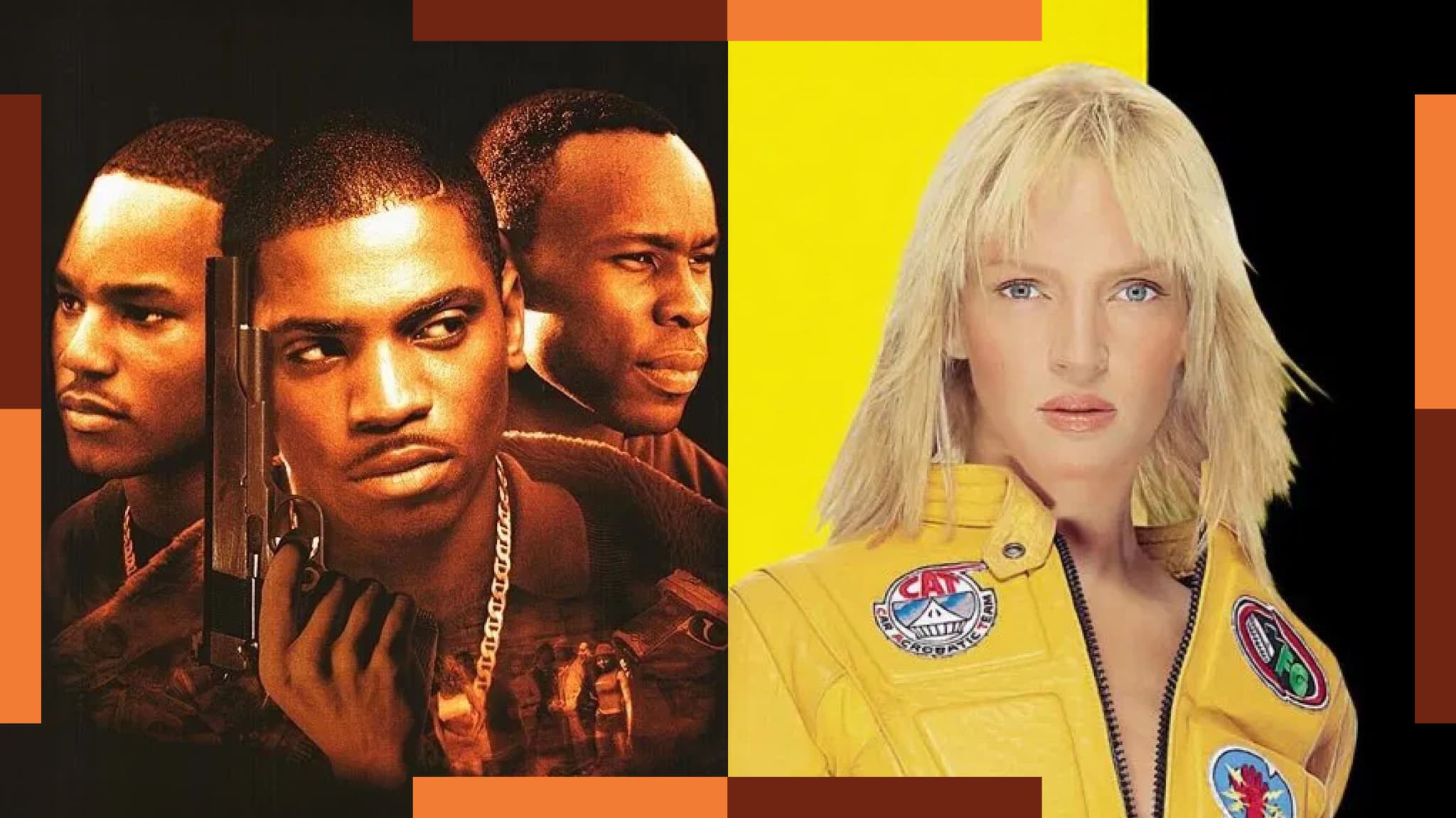
Quentin Tarantino's fourth feature marked his evolution into one of cinema's most audacious directors. Kill Bill Vol. 1 isn't just a revenge tale; it's a love letter to grindhouse flicks, samurai films, spaghetti westerns, and Shaw Brothers kung fu. The film's visual language became instantly recognizable: Uma Thurman's yellow suit (borrowed from Bruce Lee’s Game of Death), the Hattori Hanzō sword, the blood-red title cards.. Tarantino understood that revenge stories work best when style and substance merge, and every frame contains some pulp reference.
Kill Bill's influence can be felt in the John Wick franchise, Shang-Chi and the Legend of the Ten Rings, and Everything Everywhere All At Once. -Darius Osborne
17.Creed (2015)
Director: Ryan Coogler
Writer: Ryan Coogler, Aaron Covington
Ryan Coogler's revival of the Rocky franchise follows Apollo Creed's son Adonis (Michael B. Jordan) as he forges his own path outside his father's shadow. Coogler crafted a sensitive character study that paid homage to Philadelphia while revitalizing the franchise — he film quadrupled its budget at the box office, paving the way for a new series.
Before Black Panther, before his Sinners deal, Creed introduced Ryan Coogler to the world as a major talent beyond the indie world. -khal
16.Avengers: Endgame (2019)
Director: Anthony Russo, Joe Russo
Writer: Christopher Markus, Stephen McFeely
The Marvel Cinematic Universe is one of the critical franchises in film history, whether you like it or not, and Avengers: Endgame is the biggest entry..
Avengers: Endgame wasn't a film; it was a cultural event, the cinematic equivalent of the World Cup. The box office records — $2.799 billion made worldwide — stand as proof. Whether the MCU can eventually top Endgame remains to be seen, but few moments in film history will have the same cultural and commercial impact. -Devin Nealy
15.Everything Everywhere All At Once (2022)
Director: Daniel Kwan, Daniel Scheinert
Writer: Daniel Kwan, Daniel Scheinert
Filmmakers Daniel Kwan and Daniel Scheinert (collectively known as the Daniels) are no strangers to putting the weird and wild on film. Even so, their take on the multiverse, centered on a Chinese American woman played by Michelle Yeoh, takes the cake for its bizarre and whimsical worldbuilding. From Matrix-inspired fights with a butt plug-shaped paper weight to characters struggling to live with hotdog fingers, each scene is more fantastical than the last.
In the midst of all its genre-blending chaos, the Daniels somehow work in a whole host of philosophical themes, too. And as the film rolls, Katamari-like, towards its conclusion, you come to realize that all of its component pieces are part of a greater, life-affirming message about what makes life worth living. -Brent Ervin-Eickhoff
14.Mad Max: Fury Road (2015)
Director: George Miller
Writer: George Miller, Brendan McCarthy, Nico Lathouris
George Miller's Mad Max films have always been unique, but Fury Road stands alone. Essentially one long chase sequence through a dystopian wasteland, the film delivers relentless action: bombs tossed by motorcyclists, warriors swinging from poles between speeding vehicles, some electric guitar soloing. But Charlize Theron and Tom Hardy ground the chaos with memorable performances that never let the viewer forget the emotional stakes of the spectacle.
Combining practical effects, visual wizardry, and death-defying stunt work, Mad Max: Fury Road represents action filmmaking at its peak. -Brent Ervin-Eickhoff
13.Anchorman: The Legend of Ron Burgundy (2004)
Director: Adam McKay
Writer: Will Ferrell, Adam McKay
Ask someone why Anchorman is one of the best movies of the 21st century, and you'll get a quote. "I'm Ron Burgundy." "Stay classy." "I love lamp." That's the point: the 2004 comedy became an endlessly quotable cultural phenomenon.
Directed by Adam McKay, Anchorman pioneered a new standard for comedy: raunchy and packed with one-liners that infiltrated the zeitgeist. Will Ferrell, Steve Carell, Paul Rudd, Christina Applegate, and David Koechner play dumb characters who flip the macho newsroom on its head, with absurd takes on workplace issues. The film's most iconic scene? Veronica tricks Ron into reading whatever's on his teleprompter, leading him to tell San Diego to go fuck itself on live television.
Anchorman paved the way for Step Brothers, Talladega Nights, and Walk Hard, establishing a comedy template that still resonates. In Ron Burgundy's words: "Don't act like you're not impressed." -Layla Ahmad
12.Training Day (2001)
Director: Antoine Fuqua
Writer: David Ayer
After two decades of playing morally upright, decent men, Denzel Washington took a chance with Training Day. He won an Oscar playing Detective Alonzo Harris, a shameless, depraved asshole who wears his badge as a cover for criminality. All the things we love about Denzel—his handsomeness, his swagger, his charisma, his million-dollar smile—only emphasized his character's hypocrisy.
Director Antoine Fuqua received permission from LA gangs to film in the Imperial Courts housing projects; it's the scene where Alonzo and Jake raid Sandman's house using a Chinese menu as a search warrant. The entire film drips with menace and danger thanks to the cinematography, which casts everything in shadow, even as smog blurs it. King Kong ain't got shit on this. -Kevin Wong
11.Uncut Gems (2019)
Director: Josh Safdie, Benny Safdie
Writer: Ronald Bronstein, Josh Safdie, Benny Safdie
Uncut Gems, the Safdie brothers' final collaboration, is a relentless anxiety attack set in NYC's Diamond District. Adam Sandler's Howard Ratner alienates everyone in his life—bookies, family, gangsters, friends—while spiraling deeper into gambling debt. Howard isn’t anyone’s idea of a best friend, but his desperate climb out of the hole he's dug makes the film compelling.
The film captures its 2012 setting perfectly, with The Weeknd and Trinidad Jame$ partying at 1OAK. If Gems made you uncomfortable, that was the point — not every story has heroes or winners. -khal
10.Spirited Away (2001)
Director: Hayao Miyazaki
Writer: Hayao Miyazaki
Writer/director Hayao Miyazaki is a living legend, one of the most principled, humanistic artists. And Spirited Away is the tipping point for America embracing his genius, thanks to Disney acquiring its U.S. distribution rights. It won the Academy Award for Best Animated Feature and is rightly considered one of the greatest films ever made.
A meditation on Shinto Buddhism? An Alice in Wonderland-esque journey into the surreal? A coming-of-age story about a young girl on the cusp of adult responsibility? A damning indictment of human greed and corruption via excess? Spirited Away is all of these things, and it forms a greater whole by merging its disparate parts. - Kevin Wong
9.Black Panther (2018)
Director: Ryan Coogler
Writer: Ryan Coogler, Joe Robert Cole
The partnership between Ryan Coogler Michael B. Jordan delivered another knockout with Black Panther. Coogler's direction balanced Marvel spectacle with cultural specificity: the Warrior Falls waterfall battle, the neon-soaked streets of Busan, and Ruth E. Carter's Oscar-winning costumes drawing from across the African diaspora. Add in a stellar Kendrick Lamar soundtrack, and you've got a film powered by themes of identity and revolution.
What elevates Black Panther beyond typical superhero fare is its refusal to simplify. We know T'Challa, played by the late great Chadwick Boseman, will eventually defeat Jordan’s Killmonger. But Killmonger's anti-colonial rage can’t just be dismissed as villainy. Jordan's performance forces audiences to confront discomfiting realities: Wakanda's isolationism enabled global oppression, and the "villain" has legitimate grievances. The film grapples with tradition versus progress, questioning whether power hoarded is power wasted.
The "Wakanda Forever" gesture led audiences of every background to join in on the salute; even if it was just a hand signal , the symbolic power left a lasting mark on cinema. -Darius Osborne
8.Paid in Full (2002)
Director: Charles Stone III
Writer: Matthew Cirulnick, Thulani Davis
Rich Porter, Albert "Alpo" Martinez, and Azie "AZ" Faison are three of the most infamous names in New York crime, so it was only a matter of time before their story hit the big screen. Despite critics dismissing it as too familiar, Dame Dash and Roc-A-Fella Films brought it to life—and the culture embraced it.
The Wire star Wood Harris anchors the film as Ace, who goes from delivering laundry to moving product. Mekhi Phifer plays Mitch, while a young Cam'ron perfectly captures the volatile Rico — together, they're unstoppable. The early 2000s cast includes Regina Hall, Elise Neal, and even Noreaga in a minor role.
Yes, you've seen this story before. But did Goodfellas stop you from watching A Bronx Tale? The film delivers iconic moments, standout performances, and captures a pivotal era in hip-hop history. - khal
7.The Wolf of Wall Street (2013)
Director: Martin Scorsese
Writer: Terence Winter
By 2013, Martin Scorsese had nothing left to prove, which makes The Wolf of Wall Street all the more remarkable. Rather than coasting on his legacy, Scorsese delivered one of his most provocative films.
Critics who claim the film glamorizes Jordan Belfort miss the point entirely. The Wolf of Wall Street's three-hour excess is the commentary—Scorsese lets viewers revel in Belfort's depravity to expose how easily we're seduced by wealth and power. Released just five years after the 2008 financial collapse that Belfort's generation of fraudsters enabled, the film asks an uncomfortable question: Why do we find these criminals so entertaining? The lack of moral judgment is deliberate—Scorsese trusts audiences to recognize the rot underneath the Lamborghinis, quaaludes, and Leonardo DiCaprio's charm. Speaking of Leo, he delivers a career-defining performance, channeling pure id as Belfort transforms from hungry broker to unhinged sociopath.
The Wolf of Wall Street refuses to moralize American greed—it simply holds up a mirror and dares audiences to look away. -Devin Nealy
6.8 Mile (2002)
Director: Curtis Hanson
Writer: Scott Silver
At the height of Eminem's early 2000s dominance, Hollywood came calling—but 8 Mile wasn't your typical celebrity-to-movie star cash cow. Based on Em's origins in Detroit's underground battle rap scene, the film offered audiences a rare window into a subculture rapidly gaining mainstream attention. 8 Mile transcended the music biopic entirely and became a meditation on class, ambition, and finding your voice in a marginalized community.
Eminem's performance is raw and director Curtis Hanson stripped away the Hollywood gloss to capture Detroit's economic decay and the desperation of people fighting to be heard.
Hanson shoots the battle-rap sequences with a boxing-match intensity, painting these verbal bouts as life-or-death. The final battle at the Shelter is iconic, as Rabbit weaponizes his own vulnerabilities to disarm Papa Doc. It's a masterclass in how self-awareness beats bravado — a key ingredient of Eminem's dominance in the 2000s. -Devin Nealy
5.Spider-Man: Into the Spider-Verse (2018)
Director: Bob Persichetti, Peter Ramsey, Rodney Rothman
Writer: Phil Lord, Rodney Rothman
Taking the reins of an established icon is one of the most challenging undertakings in film—especially when that character is one of the most beloved in comic-book history. That's exactly what Sony Pictures Animation, and the acclaimed duo of Christopher Miller and Phil Lord did with Spider-Man: Into the Spider-Verse.
Although Miles Morales was already a fixture in the comics, the character remained largely unknown to mainstream movie-going audiences. Into the Spider-Verse changed that, sparking a new debate among Spider-Man fans: Peter or Miles? With its dazzling animation style that blends digital painting with CGI, the film pioneered a new aesthetic for animated cinema. - Devin Nealy
4.The Social Network (2010)
Director: David Fincher
Writer: Aaron Sorkin
Few films capture post-9/11 angst better than The Social Network. Everything in this film feels disconnected, depressing, and numb—there's barely any warmth between its main characters. The soundtrack, by Oscar winners Trent Reznor and Atticus Ross, certainly doesn't help lighten the mood.
The Social Network is creepy, unsettling, and above all prescient. It depicts Facebook founder Mark Zuckerberg (Jesse Eisenberg) as an ambitious, petty, self-obsessed nerd who treats popularity and social acceptance as an equation to be solved. It's Shakespearean in its scope and underlying irony—that in the process of creating a social network that virtually links millions of people across the globe, Mark lost every person who gave a damn about him in real life. -Kevin Wong
3.Superbad (2007)
Director: Greg Mottola
Writer: Seth Rogen, Evan Goldberg
When Seth Rogen and Evan Goldberg wrote the first draft of Superbad as teenagers, there’s no way they could’ve predicted how successful (and quoted) the film would go on to be. Hilariously chronicling two misfit high-school seniors' exploits at an end-of-year party, this buddy comedy has as much heart as it has laugh-out-loud moments.
From Jonah Hill, Michael Cera, and Emma Stone to the uncannily weird Christopher Mintz-Plasse as Fogel (aka "McLovin"), everything about this teen comedy is perfectly dialed in.
The mid-2000s were a golden age for comedy, and Superbad had a large hand in that era's success. It also jumpstarted the career of a handful of future stars, which is another sign of its 21st-century significance. -Brent Ervin-Eickhoff
2.The Dark Knight (2008)
Director: Christopher Nolan
Writer: Jonathan Nolan, Christopher Nolan
From its opening IMAX-filmed bank heist, The Dark Knight announces itself as something different. Christopher Nolan's 2008 sequel pits Batman against the Joker (Heath Ledger), a criminal who turns chaos into theater.
Ledger's gleefully menacing performance towers above every other Joker interpretation. From his ever-shifting origin story to the way he makes a pencil disappear, he makes the character simultaneously hilarious and terrifying—in other words, a perfect villain.
Nolan operates at peak form, juggling multiple threads while constantly escalating tension. The Dark Knight earned Ledger a posthumous Oscar and defined what a serious superhero film could be. -Brent Ervin-Eickhoff
1.Get Out (2017)
Director: Jordan Peele
Writer: Jordan Peele
Suspenseful, funny, and thought-provoking, Get Out redefined the psychological thriller for the 21st century. Jordan Peele's vision plunged viewers into eerie suburbia with a dreadful twist on a Guess Who's Coming to Dinner,where polite pleasantries give way to chilling horrors. The film delivers masterful tension-building, clever writing, and standout performances, especially from Daniel Kaluuya and Lakeith Stanfield.
Peele's evolution from half of the sketch comedy duo of Key & Peele to a universally respected director and defining voice in modern movies is nothing short of remarkable. As bold social horror, Get Out is a timely conversation starter disguised as edge-of-your-seat entertainment—gripping viewers right up to that pulse-quickening final moment when red and blue lights bring unexpected relief.
Few films capture their cultural moment so precisely while remaining timeless in craft and message—Get Out did it flawlessly. - Darius Osborne