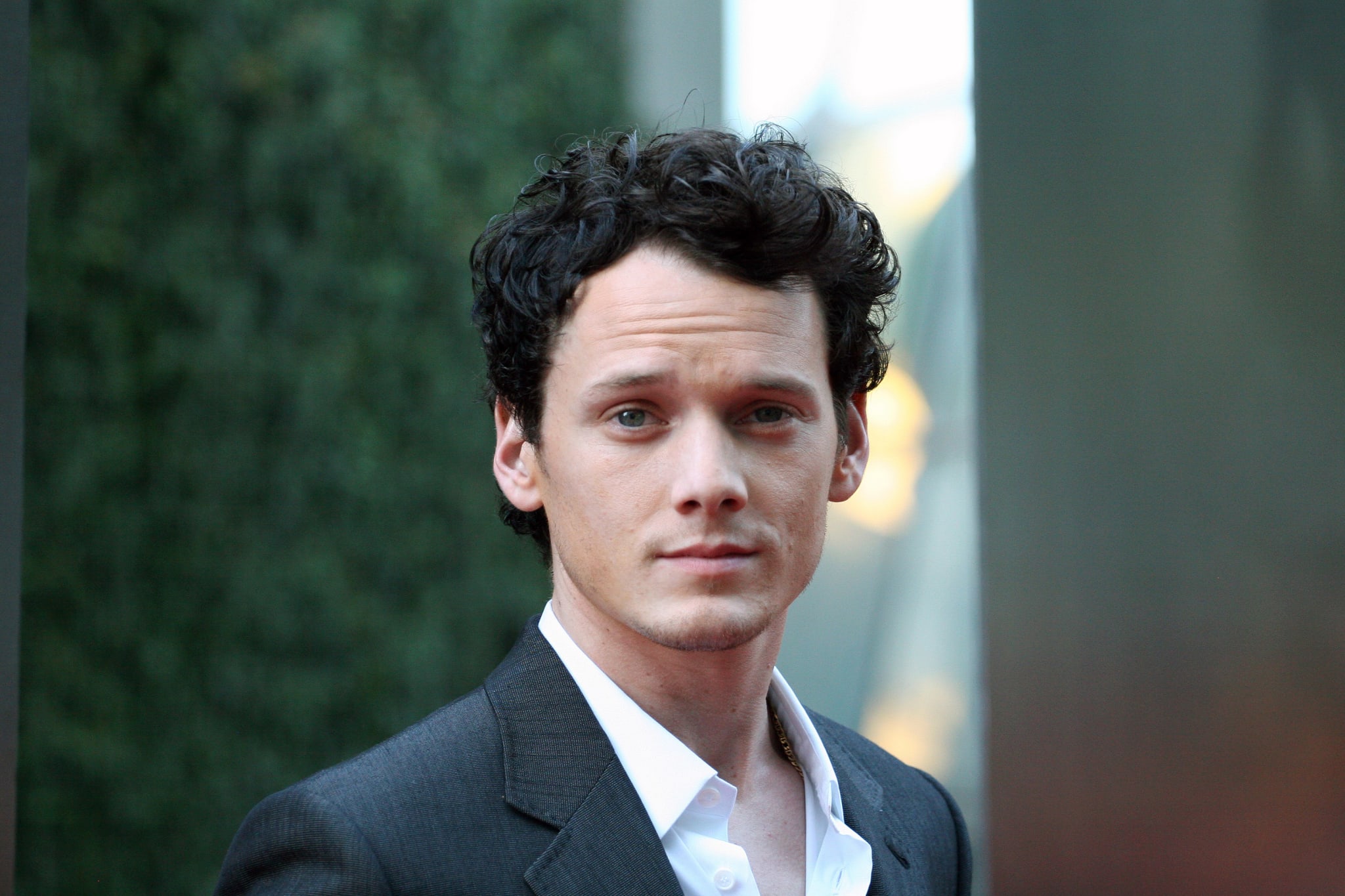
Image via Getty/Tommaso Boddi/WireImage
Anton Yelchin touched countless lives in his tragically brief life. In death, he’s impacting many more.
The world is getting to know the gifted and prolific actor more intimately than ever before thanks to Love, Antosha, a moving, inspirational, and revelatory new documentary that tells Anton’s remarkable coming-of-age story, from immigrant child, to global movie star, to budding filmmaker. Using an impressive archive of home videos, journals, script notes, and photographs, as well as heartfelt interviews with his parents, childhood friends, co-stars including Chris Pine, Jennifer Lawrence, and Kristen Stewart, directors, and even doctors, first-time director and seasoned editor Garret Price paints a portrait of a truly decent, intellectually curious, and driven, multi-talented creative who, unbeknownst to most, achieved so much while struggling with cystic fibrosis.
Despite—or perhaps because of—the genetic disorder, which affects the lungs, requires constant treatment and greatly reduces one’s life expectancy, Anton lived an enviably full and productive life. When not adding to his staggeringly robust list of 69 film and television credits, which range from J. J. Abrams’ big-budget, effects-heavy Star Trek blockbusters, playing Pavel Chekov, to Drake Doremus’ contemplative and largely improvised low-budget romantic drama Like Crazy (2011), Anton was studying cinema, making music, and photographing the fringes of society in sex clubs and elsewhere. What emerges as his loved ones reminisce is that Anton was even more complex, provocative, and inspirational than previously believed. His untimely death at 27—on June 19, 2016, his decidedly modest Jeep Grand Cherokee rolled down his driveway and pinned him against a brick pillar, asphyxiating him—robbed the world of a creative force who had so much more to give.
With Love, Antosha currently playing in Los Angeles and New York and opening elsewhere throughout the month, Anton’s Star Trek franchise co-star Simon Pegg, his Like Crazy director and Love, Antosha producer Drake Doremus, and the documentary director Garret Price share their insights into the remarkable young man, including his secretive battle with CF, utter rejection of Hollywood celebrity, and kinky photography.
Suffering in Silence
Doctors diagnosed Anton with cystic fibrosis when he was 8 but his parents didn’t reveal the full extent of his condition to him until he was a teenager. He told his closest friends but generally kept his illness a secret. Even good work friends with whom he’d developed intense connections didn’t know what he was grappling with — especially not that his mortality was on his mind in a pressing way.
“I found out while making this movie, after he passed,” says Doremus, whom Anton’s parents, Irina and Viktor, initially asked to direct the documentary because he and their son had shared such a mutually important relationship. (Feeling he was too close to the subject, he opted to produce instead.)
“Anton was always a little bit sickly,” says Pegg, who was also unaware of what his friend was enduring. “He had this throaty cough always and he’d take these meds, but I didn’t infer any kind of seriousness to it. He’d always just say his lungs were a bit shot. Particularly on Beyond, Anton and I spent a lot of time talking, like, really late at night, and we’d have these big heart-to-hearts, but he never mentioned [his cystic fibrosis]. I guess that was him just not wanting to share that part of him. It was a surprise when I realized how serious it had been. I don’t think he wanted a pass, and he didn’t want [CF] to define him in any way, so he didn’t allow it to.”
Near the end of his life, Anton was leaning towards revealing his condition to the world, in case the knowledge could benefit others dealing with CF. With the revelations of Love, Antosha, he’s providing that inspirational example now.
Not Your Average Hollywood Star
Anton received accolades as a child and teen for his performances in Hearts in Atlantis (2001) and Alpha Dog (2006), acted with some of the industry’s biggest names (Sir Anthony Hopkins, Robin Williams, Donald Sutherland), and experienced blockbuster success playing Chekov in J. J. Abrams’ Star Trek movies. Despite a career that would have turned many other actors into entitled and egomaniacal Hollywood monsters, he was, by all accounts, down-to-earth and treated everyone respectfully.
“He was way too intelligent to buy into the notion of Hollywood and celebrity to ever consider that his job imbued him with some greater importance than anyone else,” says Pegg. “If you’re young and not particularly clever you’ll believe that you’re extremely important in Hollywood, because everyone tells you you are, because they want to make some money out of you. If you believe that lie, you can become an asshole. But Anton was way too smart to ever regard his status as an actor as anything other than facile. He understood that totally, and it made him incredibly grounded and relatable as a person, because he could see the absurdity of everything.”
Anton once sincerely and endearingly referred to himself as a “ghoul,” which makes Doremus laugh when he hears of it for the first time. “He was so thoughtful about everything,” says Doremus. “But he also saw himself as a goofy guy who wasn’t super sexy or attractive or anything like that. He was charming in so many ways but he didn’t think of himself as…. Yeah, ‘ghoul’ sounds about right. Just a fucking weirdo. He just thought of himself as a weirdo.”
Always Lurking (But Not in a Creepy Way)
In addition to acting, Anton was an avid photographer. As Chris Pine, J. J. Abrams, Ben Foster, and others describe in the documentary, he often spent his downtime photographing quirky characters in sex clubs and other interesting locales in the Valley. The stories he told on set wowed co-stars and crew members who thought they’d seen and heard everything.
“For all his youth, he seemed the most experienced of all of us [Star Trek cast members] in the end,” says Pegg. “He’d tell us about his crazy nights out in the Valley, his ‘lurking.’ He and his friends used to call themselves ‘lurkers’ and they used to go out to clubs and just lurk. Some of the stories, I could just never repeat. Nothing untoward. It was anthropological. It was never fetishistic or lewd. It was because he just wanted to experience all facets of life. He was totally non-judgmental. You see in his photography, he related to outsiders, the people on the fringes of society. He got a kick out of interacting with people like that. I think he saw himself in that respect.”
An exhibit of Anton’s photography, entitled “Anton Yelchin: Provocative Beauty,” showed posthumously at New York City’s De Buck Gallery in Jan. 2018.
Blockbuster Star With an Art House Soul
As a child, Anton’s favorite movie was Space Jam (1996). He began acting at 9, and when he got serious about it, his parents exposed him to more high-brow American and international cinema, so he’d have a greater perspective on the art form. He became a student of filmmaking and acting, watching classics like Martin Scorsese’s Taxi Driver (1976), Stanley Kubrick’s A Clockwork Orange (1971), and Michael Cimino’s The Deer Hunter (1978), taking extensive, deeply analytical notes, and compiling an encyclopedic knowledge of film that he loved to share. “It was always fun and interesting to talk to Anton about film and get into the critical theory of it, which he seemed fluent in for someone who hadn’t studied it formally,” says Pegg. “It seemed to me the logical thing was for him to become a filmmaker, because he was interested in photography and he had a definite aesthetic, a visual palette which he favored, and he loved music. He was an auteur-in-waiting.”
Despite an evident preference for high-minded cinema, Anton didn’t consider himself above mainstream popcorn fare. He intellectualized pop culture, but he did, after all, voice Clumsy Smurf in multiple Smurfs movies and act in the blockbuster Star Trek and Terminator franchises.
“At the beginning of [filming] Star Trek Beyond, we all went to see Jurassic World (2015), and it was the antithesis of what Anton loved about cinema. I think he wanted to go down the road to the art house and watch Truffaut,” says Pegg. “The fact that we were involved in making a big popular culture movie, not as weighty as some of the films he loved, was interesting. He wasn’t a snob about it. He understood the value of pure entertainment.”
No matter what project he was working on, Anton was always devoted to his craft and contributing his best to the collective creative process. This is perhaps best illustrated by priceless home video footage that Price discovered while delving into the Yelchins’ extensive archive. “The very first piece of footage that I saw when I started digging in was of [Anton] getting drunk for the first time as a teenager for his Alpha Dog role,” says Price. Anton had snuck some of his parents’ liquor and recorded his mental and physical sensations, shot for shot, so he could accurately portray it on camera and do his character justice. “It’s such an incredible piece of footage that says so much about him. He did it for the love of cinema.”
A Lasting Impact
With his intellect, humor, humility, sensitivity, and passion, Anton profoundly affected the people he encountered in life. In fact, so many people wanted to speak about him for Love, Antosha that Price couldn’t fit them all in the film.
“We interviewed 60-plus people for [Love, Antosha],” he says. “Chris [Pine] sat there for two hours talking nonstop about his friend. I think it was his first time to really just talk about what Anton meant to him. There’s people I couldn’t fit in the movie that would shock you. The first people I had to cut out of the film were Glenn Close and Susan Sarandon. And nothing against what they said. There was a point where I had to keep the narrative moving forward, and I just couldn’t find a way to fit everybody in. Everyone understood. No one’s feelings were hurt, because everyone just wanted to do whatever they could to share this story.”
With Love, Antosha giving both fans and friends a deeper understanding of who he was and how he lived his life, Anton is continuing to make his mark upon the world posthumously. “I’m realizing how much of a self-reflective film it is for people who watch it,” says Price. “They start thinking about their own lives, and they’re inspired by the way Anton lived his. They want to go and create more and make stuff and just absorb life, and be curious and take risks, and not be afraid to fail. That’s what I think he would’ve loved about this.”