Image via MGM
Tessa Thompson has range. The actor has successfully tackled roles in Marvel’s Thor and Avengers films, in romance films like Sylvie’s Love, dramas like Passing, and in sci-fi shows like Westworld. Throughout the duration of those projects, she has also returned to the Creed franchise as Bianca, a singer and songwriter from Philadelphia who deals with progressive hearing loss and who falls in love with Adonis Creed (Michael B. Jordan)—and now she’s back for Creed III, out on Friday.
Ryan Coogler, who directed the first Creed, and Thompson worked together from the start to ensure Bianca was a fleshed-out character and not just a one-dimensional love interest in a sports film. She has remained that way, while also being Adonis’ fierce supporter and the one to set him straight when needed. It has been nearly eight years since she first inhabited this character, and Thompson says Bianca, the franchise, and working with Jordan feels like returning to an old friend. “For both of us, it’s our longest relationship we’ve been in,” she tells Complex with a laugh.
Image via MGM
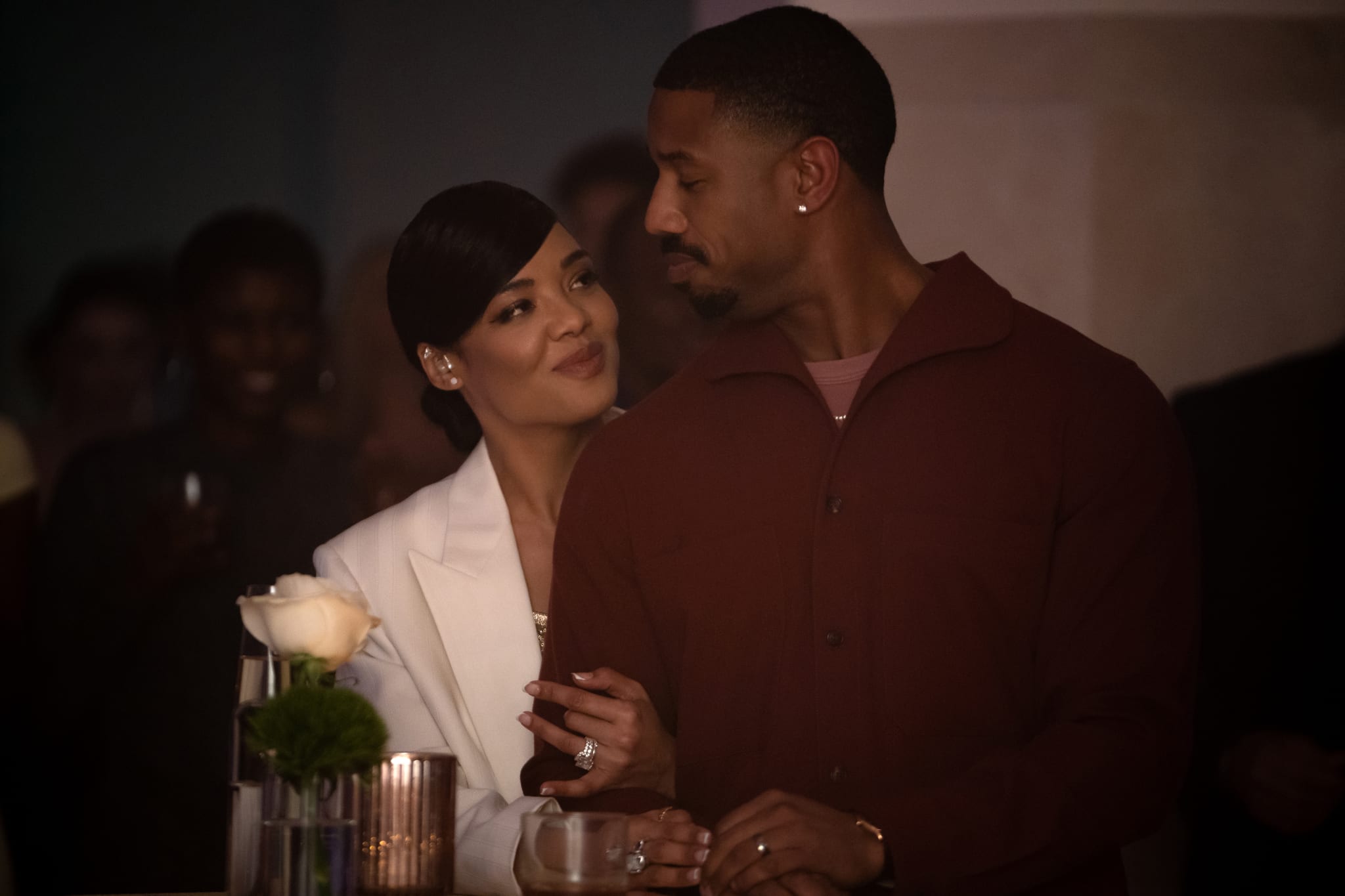
In the third installment, their relationship onscreen does feel familiar and like a couple who has been through their fair share of ups and downs together and are now in a more settled stage of their lives. They are married, living in Los Angeles, and raising their child Amara, the baby girl they welcomed in Creed II who inherited her mother’s hearing condition. Amara is played by the talented and captivating nine-year-old actress Mila Davis-Kent, who is deaf and does her entire performance in sign language, a major moment for onscreen representation for the Deaf community. Thompson wanted to ensure that story was told well, (she also learned ASL to communicate with her younger co-star), while Jordan and the Creed III production team made sure to make the film and its promotion accessible for the Deaf community.
“It was always important to me, even in [Bianca] having progressive hearing loss, that in the context of our films, her hearing loss would not progress all the way,” Thompson tells Complex. “I did not feel comfortable in telling that story. I’m not a member of the Deaf community. And I really felt like if we wanted to tell that story, we should do it with someone who is a part of that community.”
Creed III also finds Adonis adjusting to post-retirement life while Bianca leans more into producing. She pivoted to writing and producing hit songs for other artists on her label since performing has become harmful to her hearing. She has found a new path to success, but there’s a tinge of sadness of not being able to live out her dreams herself—something newcomer to the Creed family Damien (Jonathan Majors) relates to and tries to use against her and Adonis.
Complex caught up with Thompson ahead of the film’s release and she talked about watching Michael B. Jordan stepping into the director’s chair, bringing new cast members like Majors and Davis-Kent into the family, and the aspects of Bianca she wanted to protect in the new film.
We’ve been in this Creed world for almost eight years now.
It’s crazy.
You’ve accomplished so much since the first. Does Bianca and this franchise feel like coming home?
Yeah, it does. It feels like returning to an old friend and also just getting to play with Mike and have this, I mean, for both of us, it’s our longest relationship we’ve been in. [Laughs.] So it’s also you get to be like, “All right, well then I got my steady relationship that’s working.” I joke. But yes, it does feel like returning to old friends, for sure.
What I love about Bianca is that she’s never been just a love interest. She’s been Adonis’ partner all along. She supports him, but she also sets him straight when he needs it. Why was it important for her to continue having her own interests, her own passions, and also her own troubles?
Yeah, that’s something that was in the construction of the character in the first one and it was such a deep collaboration between Ryan Coogler and myself in terms of making sure that she really felt like a full human and not a cipher of a woman. And I think we just have been trying to do that in every film. And of course, we have to navigate how much page space we have, how much real estate we have inside of it, but we’re always really dedicated to that.
And what was so nice on this one with Mike as a director is he really invited me to continue to be a co-author. And I pitched him stuff and would write things and be like, “Here, what do you think?” And he really invited me into that process and I was really interested this time around with a new level of vulnerability from her and really getting to see inside of her humanity with recognizing that she has been, as a character, a force that has supported him. And I was like, but what about her? I want to hear from her more. And I’m really grateful that that exists in the film.
One of the most memorable lines in the movie was when Damian (Jonathan Majors) asked Bianca, “How does it feel to hear someone else singing your song?” We’ve witnessed the journey of Bianca’s hearing condition, but now you get to explore it through her daughter Amara. What was that like?
That was incredible. It was always important to me, even in her having progressive hearing loss, that in the context of our films, her hearing loss would not progress all the way. I did not feel comfortable in telling that story. I’m not a member of the Deaf community. And I really felt like if we wanted to tell that story, we should do it with someone who is a part of that community.
So it’s been so incredible to invite Mila and also she is just so astoundingly good and so fearless, and so fantastic and funny and dynamic and charismatic and all those things. So it’s also just exciting. Never mind the representation part, which is huge, but just to get to support a new performer in what is their introduction. That’s so cool.
It’s a big way to start for her. She’s great.
It’s so cool. I love that. I love that so much. Or even to a lesser extent. Obviously, Jonathan Majors is established, but I remember being on the jury at Sundance the year that Last Black Man in San Francisco premiered, and I was like, “This guy’s so great.” And so when I learned that he was joining our team, it just feels exciting to get to work with people that are so talented.
And the team just gets stronger, for sure.
Yeah, it does. It’s such a team sport that anytime you have a player that is very good, you’re like, “Great, our team is better.”
You’ve witnessed Michael’s progression in his career and now you see him as a director. What has that been like? Also, we know you’ve produced some of your movies and your projects. Did seeing him give you a bit of an interest to want to direct in the future?
That’s something that I already have been thinking about and working towards. So it was more just seeing my friend do it really, really well, which was incredible. But that’s something that, a spark that started for me a while ago. I think I felt just so proud of him because I feel like it’s not just important to—obviously, you want to make a good film. But for me, when I think about what will be important to me when I direct, I also want to make the experience of making the film a good one too. And when you can do both those things, I think that’s when you really are truly a fine director. So I feel very proud of him in that respect.